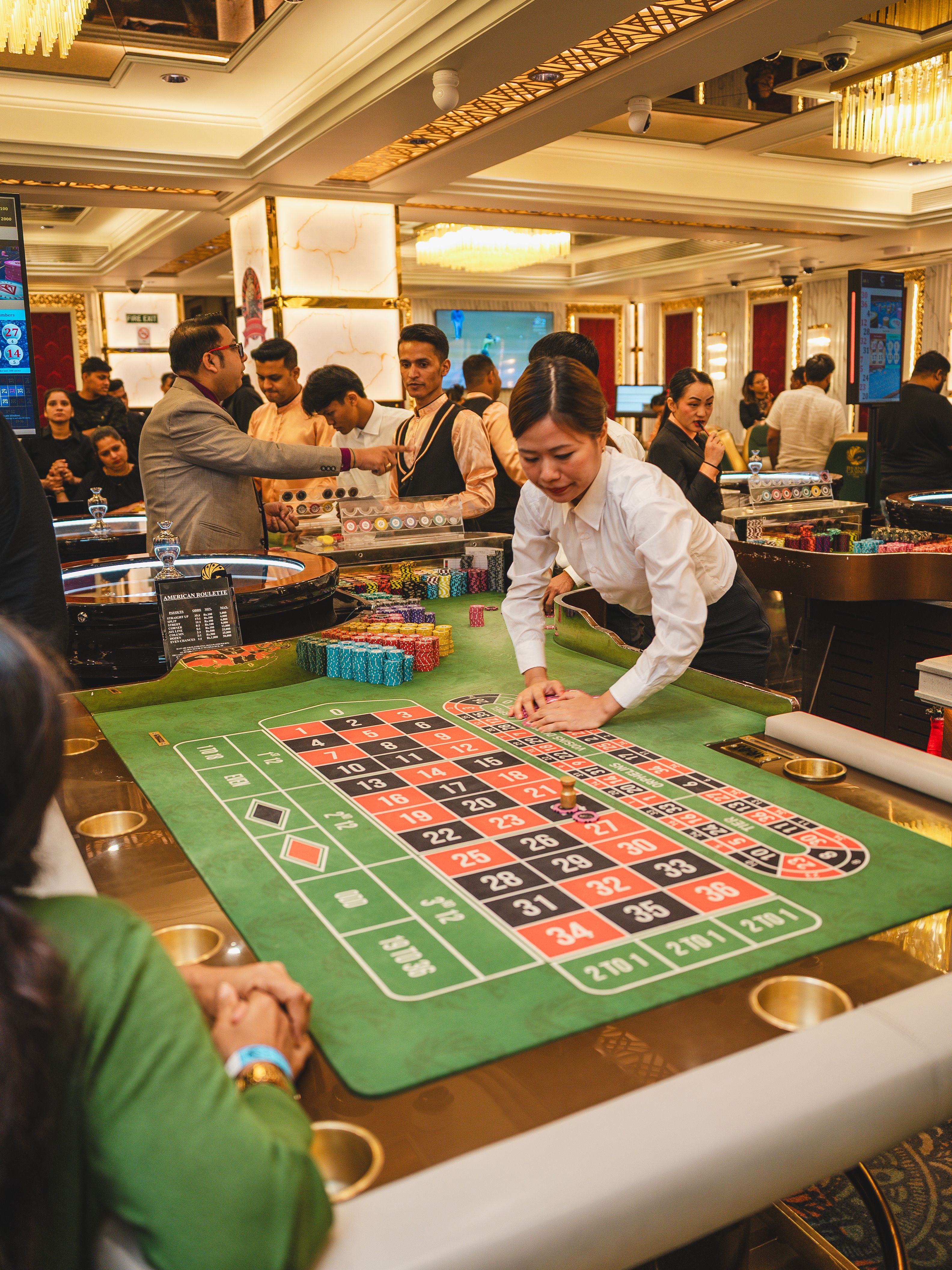
Live casino studios are real filming locations where actual croupiers run genuine games while cameras transmit the action to your device. At get casino bananzia mobile app, we view live studios as a main product type, not a small extra to slots. The main distinction is that the result comes from real equipment such as cards, wheels, and dice rather than a digital RNG. Recognizing that differentiation helps you assess fairness, pace, bonuses, and tech specs. This article covers how live studios function, what games you can find, how payments work, and which checks count before you enter a table.
What precisely a Live Casino Studio Actually Is
A live casino studio constitutes a specially designed facility optimised for broadcasting table games. In contrast to a land-based casino floor, the space is arranged for camera sightlines, controlled lighting, and crisp audio. Dealers utilise real shoes of cards, physical roulette wheels, and marked table layouts. Each table has multiple cameras, microphones, and a game control unit that bridges the physical activity to the digital betting interface. The stream reaches your device through a secure connection, with betting options placed on top of the video. This isn’t a pre-recorded simulation; the round develops in real time.
The advantage of a purpose-built studio comes from consistency. A packed casino floor can bring noise, glare, and interruptions, but a studio removes most of that uncertainty. Dealers adhere to fixed procedures, supervisors watch the floor, and technical staff can switch feeds without disrupting play. For players, this results in a better view of the action and less disputes over visibility. It also enables operators to present many tables at once, each with various limits, rule variants, and dealer languages. At Bananzia Casino, the live lobby is structured around that managed environment rather than sourced feeds from a active venue.
Desktop Connection to Live Studios
Live casino studios now broadcast to all major devices through a browser or a specialized app. Desktop provides the largest view of the table and makes side bets and statistics more convenient to read. Mobile play uses a responsive interface that rearranges the video, betting options, and chat into a smaller space. Tablets fall between the two and are often the most comfortable for live play because the screen is large enough for video but still touch-friendly. At Bananzia Casino, the live lobby conforms without requiring a separate download unless you choose an app.
A stable connection is more important than having the newest phone. Live video uses more data than slot play, and a weak connection can cause buffering, audio drift, or delayed bets. Most platforms automatically reduce the stream quality when bandwidth drops, which holds you in the game but reduces the visual clarity needed to follow card values. If you play on mobile data, check your allowance before long sessions. A Wi-Fi connection with low jitter is usually the best option for live dealer games, especially when you are betting within a short countdown.
Promotions and Deals for Live Dealer Casino Players
Real-time casino bonuses are not identical as slot bonuses. A live welcome offer may be a deposit match, a cashback promotion, or a series of smaller wagers on specific tables. Betting requirements often function differently to live games. Blackjack and baccarat games may count less toward fulfilling a bonus than slots because their casino advantage is lower or players can use low-risk strategies. Roulette and game show titles may fall somewhere in between. If you plan to use a bonus mainly on live tables, verify the contribution percentage before you activate it.
Cashback is common in live casino promotions. It generally returns a share of total losses over a defined period, such as a day or a week. The returned amount may be issued as bonus funds with its own wagering requirement, or as withdrawable cash. Deadlines, minimum loss requirements, and maximum refund limits vary. At Bananzia Casino, the offer details state these conditions, and we require players to read them as important terms. A strong cashback offer can decrease variance, but it does not alter the underlying house edge or guarantee a net profit.
Core Game Categories Available in Live Studios
Live studios now offer more than the classic three table games. The core remains blackjack, roulette, and baccarat, but each category contains several variants. Roulette can offer European, French, and speed formats, while blackjack may offer standard seven-seat tables, infinite seating, or side-bet versions. Baccarat often features standard punto banco, speed baccarat, and squeeze games where the dealer reveals cards slowly. These variants change pace, table limits, and rules. A quality lobby can therefore cater to players with very different bankrolls from the same physical studio floor.
Game show formats are the second major category. These live-hosted games are based around wheels, dice, or multiplier mechanics rather than traditional table rules. They tend to have fast rounds, simple betting options, and high production values. Many contain random multipliers, bonus rounds, or communal betting features. A third category encompasses poker-style games such as Casino Hold’em, Three Card Poker, and Caribbean Stud, where you play against the dealer rather than other players. This is separate from live poker rooms, which use tournament or cash-game formats with different rules.
Stake Limits and Selection of Variants
The range of table limits is one of the first things we check. A good live lobby shows minimum and maximum bets before you join, not after you deposit. Low stakes tables may accept very small bets, while high roller rooms can have much larger limits. Variant selection counts because a rule change can affect the house edge. For example, French roulette with la partage returns half an even-money bet when the ball lands on zero, while standard European roulette does not. We recommend comparing the rules of each variant, not just the table name.
Payments, Deposits, and Payout Processing for Active Sessions
Active sessions works best when funds are consistent. The majority of sites support debit cards, e-wallets, bank transfers, and sometimes prepaid vouchers or cryptocurrencies. Pay-ins are normally processed instantly or within a few minutes. Cashouts take longer because the casino examines the request, verifies your identity, and refunds funds to the source where possible. E-wallets typically process within a few hours after approval, while card withdrawals and bank transfers can take several business days. These represent standard timeframes, so the cashier page should be your reference for the methods available at Bananzia Casino.
Your first withdrawal typically initiates a know-your-customer review. You may be asked for a government ID, proof of address, or proof of ownership for the payment method. This secures your account from unapproved entry and fulfills licensing obligations. The optimal point to complete verification is before you request a large withdrawal, not after. Some platforms allow document upload in the account area, which can speed up later requests. We also suggest verifying whether your chosen method supports both deposits and withdrawals, because a deposit-only method can force a slower alternative when cashing out.
Typical Processing Periods and Caps
Processing windows consist of two phases: the casino’s internal review and the payment provider’s transfer time. Internal review often takes up to 24 or 48 hours, although verified accounts may be approved faster. Transfer time depends on the method. E-wallets are often the fastest, while bank wires are the slowest. Deposit minimums and withdrawal minimums can differ, and some bonuses have maximum withdrawal caps until wagering is complete. Rather than trust your recollection, we treat the cashier and promotion terms as the official guide for any limit or processing time.
How Live Dealer Streaming Works from Studio to Screen
Once you launch a live table, several systems operate in sync within seconds. The studio delivers video from multiple cameras through a streaming server. At the same time, a game control unit processes the table activity. For roulette, sensors may register where the ball lands. For card games, the dealer or scanner captures card values. That data becomes a digital overlay, so you observe betting options, win amounts, and game history on top of the video. The video and data layers must stay synchronised so the interface does not display an open bet after the round has closed.
Latency is the main technical challenge. What you see is always slightly delayed because encoding and network transfer consume time. Good live studios bring down this to a few seconds or less, but no stream is truly real-time. That is why betting windows have clear countdowns. When the dealer stops betting, the system locks your interface immediately. If your connection weakens, the stream quality may drop before your bets are affected. A stable connection matters more than raw speed, and most platforms reduce the resolution automatically to keep the session alive.
The Purpose of the Game Control Unit
The game control unit, often referred to as the GCU, is the table hardware that links the physical game to the online platform. It processes video, receives data from sensors, and transmits results to the game server. In roulette, it may obtain the winning number from wheel sensors. In blackjack, it monitors card values and aids in calculating payouts. Without this unit, a live stream would be passive video with no interactive betting layer. Its reliability is a key factor in whether a table runs smoothly over long sessions, especially during peak hours.
How Results Are Verified and How Results Are Verified
Integrity in a live studio rests on physical procedures as opposed to software certification alone. A card is shuffled in view, a roulette ball spins on a physical wheel, and the dealer follows a fixed order of operations. Supervisors observe the floor, and recorded footage can be examined if a dispute occurs. Many studios swap dealers between tables to lower the risk of repetitive errors or misconduct. Human error can still happen, but the controlled environment makes it simpler to detect and correct than in a random number generator where the algorithm is hidden.
Random number generators still play a auxiliary role in some live games, especially for bonus features, multiplier values, or the order of cards in a shuffle machine. The main game outcome, however, is physical. In roulette, the wheel and ball decide the result. In blackjack and baccarat, the cards dealt from the shoe dictate the result. This separation is important because you can observe the causal event directly. Regulated live studios are inspected for equipment standards, table procedures, and payout accuracy, and the operator should present licensing information that validates the studio’s jurisdiction.
Card Shuffling and Dealer Procedures
In card-based live games, shuffling is rarely left to chance. Some tables use automatic shuffling machines that randomise multiple decks before the shoe is loaded. Others switch between freshly opened decks and a manual riffle where rules require a visible sequence. Dealers usually fan the cards face down, cut the deck after the shuffle, and insert it into the shoe. After each round, cards are transferred to a discard tray. The dealer cannot access into the shoe out of order. These routines are designed to create an unbroken chain of custody from shuffle to result.
Licence Protection, and Responsible Live Casino Play
A trustworthy live casino should be open about its regulation and security measures. The permit verifies that the operator upholds requirements for player funds, fair terms, and responsible gambling. Security encryption protects personal and payment details during transmission, but encryption alone is not a guarantee of fairness. The live studio itself runs under a gaming licence that includes the physical equipment and dealer conduct. When you visit Bananzia Casino, the relevant licensing information should be shown in the footer or terms section. If a platform withholds that information, regard it as a warning.
Responsible play tools are an element of a well-run live casino. Deposit limits, session reminders, time-outs, and self-exclusion options should be accessible from your account. Live games can generate a faster betting rhythm than slots because you are responding to a dealer’s countdown rather than determining your own pace. That rhythm can be immersive, but it also makes session limits beneficial. We recommend setting a loss or time limit before joining a run of live tables. The most reliable platform is one that lets you enforce those limits inside your account without needing to contact support.
FAQ
Jsou hry v živém kasinu poctivé?
Živé kasinové hry jsou spravedlivé, když provozovatel a studio vlastní licence od renomovaných regulátorů. Základní výstup je hmotný, takže vidíte karty při rozdávání, točící se kola, nebo padající kostky. Studia používají pevné postupy dealerů, dohled a záznamy pro vyřizování stížností. Automatické míchací přístroje a manipulace s kartami jsou auditovány. Ani jediná hra nezaručuje hráčům jistou výhru, ale férovost znamená, že výsledek není zmanipulován proti vám. Navrhujeme sázet jen na platformách, které zobrazují licenční údaje a mají srozumitelný mechanismus pro řešení nedokončených kol.
Je nutné zvláštní software pro hraní her s živým dealerem?
Není nutné extra program pro hraní her v živém kasinu na většině současných platforem. Přenos standardně poběží v běžném webovém prohlížeči na stolním zařízení nebo telefonu. Některé platformy také nabízejí dedikovanou aplikaci, ale ta je dobrovolná. Spolehlivé připojení k internetu a moderní prohlížeč jsou zásadnější než instalace extra softwaru. Pokud vaše zařízení neumí WebRTC nebo některé formáty médií, stream se nemusí spustit. V této situaci obvykle pomůže smazání dočasných souborů nebo zapnutí podpory médií.
Lze hrát živé kasinové hry na mobilním zařízení?
Yes, live casino games work on mobile and tablet via a responsive website or a casino app. The interface rearranges the video and betting controls for a smaller screen. Tablets often provide the best balance between video size and touch controls. A reliable connection matters more than device age. On mobile data, live video requires more bandwidth than slots, so review your allowance. We advise connecting to Wi-Fi for lengthier sessions. The same account, balance, and game rules hold true across devices.
Do live casino bonuses different from slot bonuses?
Live casino bonuses are often stricter than slot bonuses. Live games such as blackjack and baccarat may contribute a reduced percentage toward wagering requirements, or they could be excluded from certain offers. Cashback is frequent in live promotions, but it may be awarded as bonus funds with conditions. Be sure to check eligible games, contribution goal.com rates, maximum bet during wagering, and time limits before claiming. A bonus that looks generous can become unappealing if only a narrow selection of live tables qualifies.
What payment methods are available for live casino play?
Common payment methods include debit cards, e-wallets, bank transfers, prepaid vouchers, and sometimes cryptocurrencies. Deposits are usually instant or near-instant. Withdrawals take longer because of identity checks and provider transfer times. E-wallets are often fastest after approval, while card and bank transfers may take several business days. Not every method supports both deposits and withdrawals, so check the cashier before choosing. Your first withdrawal may require identity verification, which is standard and protects the account.
Is live casino slower than regular online casino games?
Live casino rounds often move faster than some automated games, but slower than others. The dealer sets the pace through betting countdowns, so you cannot pause and return to a hand. That can create a quicker rhythm, especially in speed roulette or speed baccarat. However, standard live blackjack may feel slower than turbo slots because you wait for shuffling and payouts. If you prefer direct control over pacing, choose standard tables rather than speed variants and set a session time limit.
What should I examine before sitting at a live table?
Prior to joining a table, check the betting limits, game rules, and version. Look at the payout table and any side bets you don’t grasp. Verify your connection is stable and your balance can handle several rounds. If you intend to use a bonus, verify that the game qualifies for wagering. Review the betting countdown length so you can keep up. To finish, determine a loss or time limit. These checks require under a minute and reduce the chance of entering a table under the wrong assumptions.